

The level of instability the homeless experience can have a negative effect on their mental health due to the loss of control they have over their living situations.
The Mental Health Foundation has reported that mental illnesses are more prominent in the homeless population in comparison to the general population
‘including major depression, schizophrenia and bipolar disorder’.
Homelessness can influence the occurrence of mental illness, further the stresses of personal and financial issues can have a triggering effect. For example, the cost of living has risen in 2022 and keeping up with these payments is not attainable for everyone. The pressures and anxieties that come with higher costs of living and low wages not keeping up with the rising inflation will most likely influence a person\’s mental stability. As well as finding adequate housing for the homeless, emphasis should be placed on treating a homeless person\’s mental health.
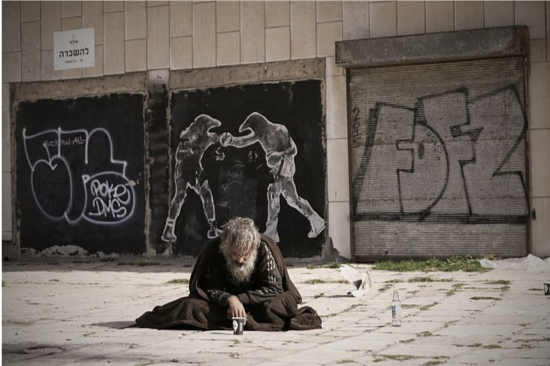
The BMJ (2018) states that people experiencing homelessness are ‘more likely to suffer from mental ill-health and at the same time, less likely to access the health services they need’.
Homeless people are less likely to prioritise their mental health because the most important focus for them is finding safe shelter. In some instances, alcohol and drugs are used to mask mental health problems, instead of seeking medical help.
Unify has acknowledged this issue within the homeless population as the recipient cards don’t allow for cash withdrawals and the purchase of alcohol.

Homelessness may provoke the possibility of suicidal thoughts and actions, lack of security in finding safe shelter can have negative effects on a homeless person’s mental health. Continual transitioning, sleeping rough and not being able to obtain secure housing could increase the risk of mental illness.
Tackling these issues is vital in decreasing the homeless community’s morality rate. People experiencing homelessness may be deterred from accessing the help they need from health services due to the stigma that is connected to being homeless, and they may not feel comfortable of welcomed in these environments.
The Office for National Statistics reported that in 2020, ‘74 deaths of the homeless were related to suicide’.
They have also found that the \’life expectancy of a homeless male is 45 and a homeless female is 43.\’ This shows that morality and mental health are closely connected, and both must be prioritised.
Homelessness is an isolating experience and the judgement that is placed on them by the general population can have a deep impact as very few individuals access the health services they need. To lower the homeless community’s mortality rate, wider society must be informed on the influence of negative labels and stigmatisation, as everyone is entitled to equal access to healthcare.
Your donations are crucial in giving our pilot profiles the donations they so desperately need. Once the app is complete, and we have created the first user profiles in each location, your donations will be distributed equally to the homeless people in that area.
References:
https://www.bmj.com/content/360/bmj.k902/rr
https://www.ons.gov.uk/peoplepopulationandcommunity/birthsdeathsandmarriages/deaths/bulletins/deathsofhomelesspeopleinenglandandwales/2020registrations
https://www.mentalhealth.org.uk/statistics/mental-health-statistics-homelessness